Cart
0
grew up with it, but among younger parents and wellness-curious folks who are only now discovering it exists.
So let's actually talk about it. What it is, why grandmothers trusted it so much, what we now understand about why it might work, and because let's be honest, almost nobody has time to make it from scratch anymore how you can still get it without spending a whole day soaking and grinding cotton seeds.
So What Is Paruthi Paal, Exactly?
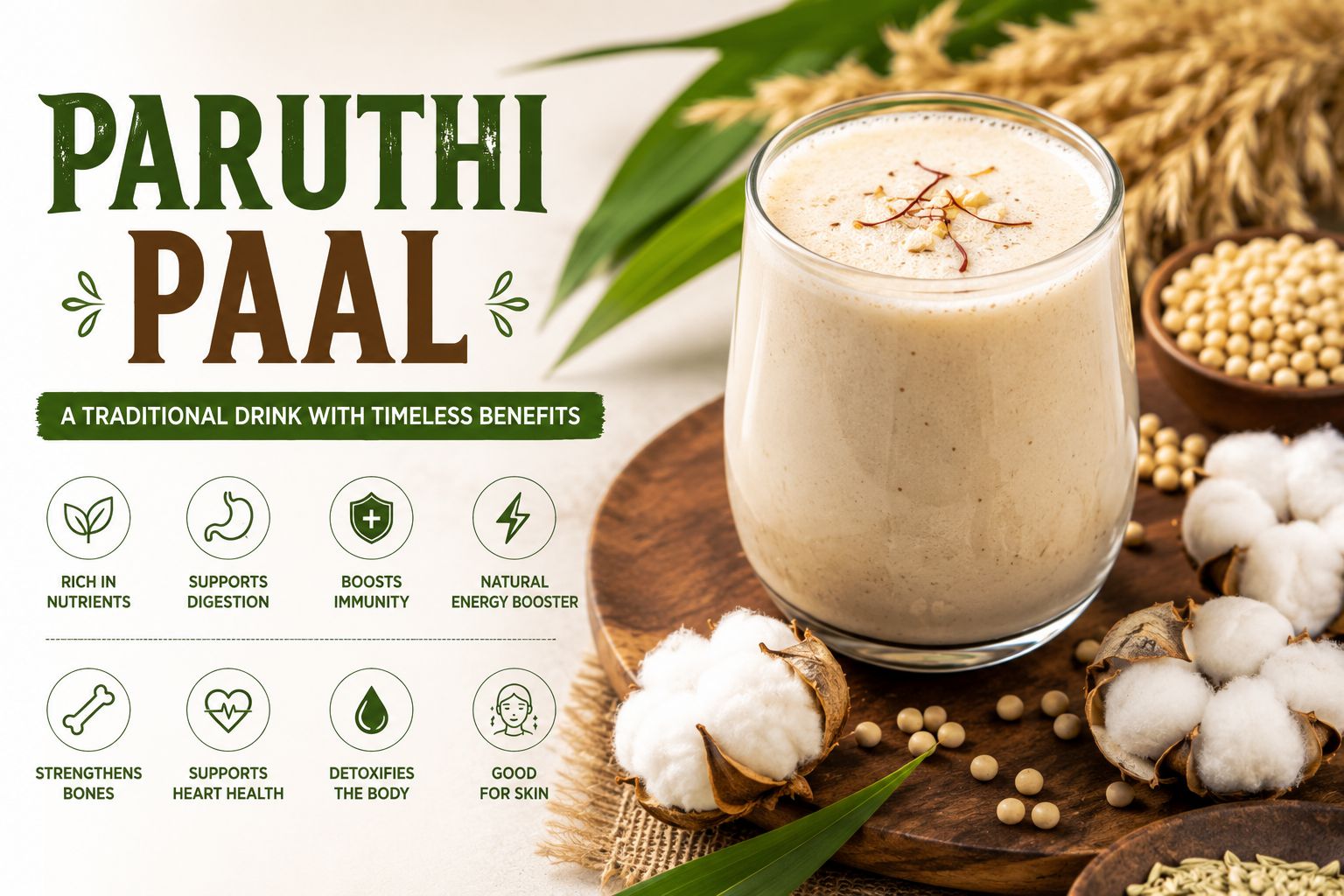
The name translates simply to "cotton milk." You take cotton seeds, soak them, extract a milky liquid from them, and then cook that down with jaggery, dry ginger, a bit of edible gum (gond), and sometimes a handful of other warming spices depending on which family's recipe you're following. What comes out the other end is thick, slightly sweet, and honestly an acquired taste for some people the first time around.
You won't find this sitting on a supermarket shelf next to regular milk. It's part of a whole category of what are sometimes called confinement foods, things specifically cooked for a person recovering from childbirth. Almost every part of India has its own version. Up north it might be panjiri, in Maharashtra you'll see gond ke laddoo. Tamil Nadu's answer to that is Paruthi Paal.
Why It Was Never Optional in Most Tamil Households
Traditional Siddha medicine treats the weeks after delivery as a period where the body has been through a lot and genuinely needs rebuilding, not just rest. Paruthi Paal fits into that idea. Cotton seeds carry a decent amount of protein and natural fats, and once you add jaggery and dry ginger into the mix, the whole thing was believed to do a few things at once:
- Help with breast milk supply
- Support the uterus as it recovers and contracts
- Keep the body warm and give some energy back during an exhausting stretch
- Take the edge off joint pain and general soreness after delivery
- Settle digestion, which tends to go sideways right after childbirth anyway
None of that came from a research paper. It came from being tried, repeated, and passed down enough times that families stopped questioning it. Which is sort of the whole point of traditional medicine, isn't it; it worked long before anyone bothered explaining why.
What Nutrition Science Actually Says About It Today
Here's where it gets more interesting. There's a real, growing interest right now in looking back at old postpartum recipes and actually understanding what's happening in them nutritionally, instead of just accepting them on faith.
Cotton seeds themselves aren't a random ingredient; they bring a decent amount of protein, some healthy fats, and minerals like calcium and iron, all of which matter a lot for a body that's just lost blood, gone through major hormonal shifts, and physically been through the wringer during delivery.
Jaggery is doing more work than most people give it credit for too. It's a reasonably good source of iron, which is exactly what a lot of new mothers need to replenish after childbirth. Dry ginger helps digestion move along and cuts down on the bloating a lot of women deal with in those first weeks. And the edible gum, the ingredient most people can't quite explain — is traditionally there for joint support, which actually lines up with what we know today about calcium needs during recovery.
Put it all together and Paruthi Paal starts to look less like a superstition and more like a fairly well thought-out nutritional formula that just happened to be built centuries before we had the vocabulary of "macros" and "micronutrients" to describe it.
Why Almost Nobody Makes It At Home Anymore
I'll be honest about this part instead of dressing it up. Making real Paruthi Paal at home is genuinely difficult these days. Finding decent quality edible cotton seeds in most cities is a task in itself. Even once you've got them, the soaking, extracting, and slow cooking takes hours and a fair bit of skill and most new parents, running on three hours of sleep and a constant stream of things to figure out, just don't have that kind of time or energy.
So what happens in a lot of families now is either it gets skipped entirely, or it falls on whoever's oldest in the house who still remembers how to make it properly. And that knowledge is thinning out with every generation. Fewer people are learning the process, which means fewer people can pass it on.
That gap is exactly where cleaner, ready-made versions of Paruthi Paal have started stepping in.
Where Urban Sprouts Paruthi Paal Fits Into All This
This is the part where I'll mention our own product, because it genuinely comes from trying to solve this exact problem. Urban Sprouts Paruthi Paal was built so families don't have to choose between "do it the traditional way and lose half a day" or "skip it altogether." We've kept it close to the original: real cotton seeds, jaggery, the same warming ingredients your grandmother would've used but without you having to source anything or stand over a stove for hours.
For a new parent in 2026 who's already juggling recovery, feeding schedules, and about a hundred other things nobody warned them about, having a version of Paruthi Paal that's ready when needed takes one thing off the list, without asking them to give up on a tradition that's genuinely helped generations of mothers before them.
If you're trying to include Paruthi Paal in a new mother's recovery but the traditional route just isn't realistic for your household right now, Urban Sprouts Paruthi Paal is worth a look.
Who Actually Benefits From Drinking It
It's mostly associated with postpartum recovery, and that's still where it's most relevant, but it isn't exclusively for that:
- New mothers, particularly in the first 40 to 60 days after delivery
- Breastfeeding mothers looking for some natural support with milk supply
- Women dealing with low iron or mild anemia, thanks to the jaggery content
- Anyone recovering from general fatigue or low energy, ideally with some guidance
One thing worth saying clearly: check with a doctor or lactation consultant before starting this, or really any postpartum drink, especially if there are existing health conditions or complications from delivery involved.
Fitting It Into a Daily Routine
Traditionally, it's had once a day, usually in the morning, and continued anywhere from a few weeks to a couple of months post-delivery. It's meant to be drunk warm, the same way you'd have a glass of warm milk. With a ready-made version, there's no overnight soaking or hours-long cooking involved; it just becomes one more thing you can prepare quickly on an already unpredictable schedule.
Why This Kind of Drink Is Coming Back Into Fashion
There's a bigger shift happening beyond just Paruthi Paal. More people right now are actively moving back toward whole-food, traditional nutrition instead of reaching straight for a supplement bottle. Paruthi Paal happens to sit right in the middle of that shift. It's not really a new trend so much as people finally circling back to what their grandparents already knew, now with a slightly better understanding of why it worked in the first place.
Whether you're a new mother yourself, helping someone else through their postpartum recovery, or just someone who's curious about traditional Indian nutrition, Paruthi Paal is worth knowing about and worth trying, if it makes sense for you.
Frequently Asked Questions About Paruthi Paal
-
What is Paruthi Paal made of?
It's traditionally made from cotton seeds, cooked with jaggery, dry ginger, and edible gum into a thick, nourishing drink. -
What are the main benefits of Paruthi Paal for new mothers?
It's traditionally used to support lactation, help the uterus recover, ease body pain, and provide energy during the postpartum period. -
Is it safe to drink Paruthi Paal every day?
It's usually taken once a day during postpartum recovery, but it's worth checking with a doctor or lactation expert first, especially if you have any existing health conditions. -
How soon after delivery should you start drinking it?
Most families start within the first week and continue for anywhere from 4 to 8 weeks, though this really depends on individual recovery and medical advice. -
Does Paruthi Paal actually help with breast milk supply?
Traditionally, yes it's widely believed to support lactation because of its protein and nutrient content, though how much it helps can vary from person to person. -
Where can I get Paruthi Paal if I can't make it at home?
Since sourcing cotton seeds and making it from scratch isn't practical for a lot of families, many now go with ready-made options like Urban Sprouts Paruthi Paal for convenience. -
Is Paruthi Paal only meant for postpartum recovery?
It's most commonly used postpartum, but it can also help people recovering from general fatigue or low iron, ideally under some guidance. -
Are there any side effects to watch out for?
In normal, moderate amounts it's generally well tolerated, but anyone with allergies or specific health conditions should check with a doctor before starting.